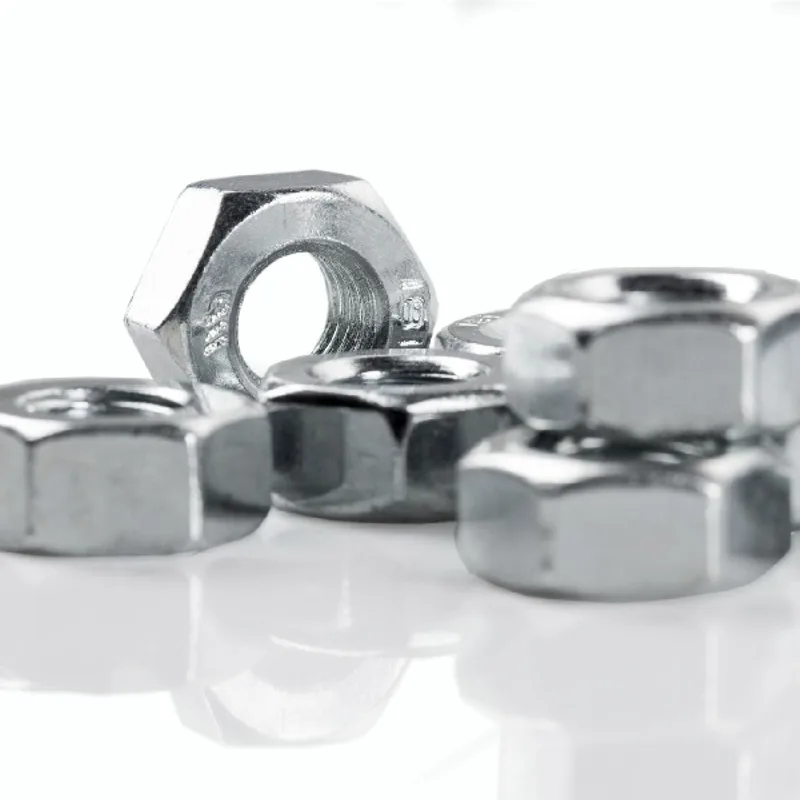
For marine applications, the choice between A2 (304) and A4 (316) stainless steel fasteners hinges on chloride exposure and required service life. A4 stainless steel, with its molybdenum addition (2–3%), offers significantly higher pitting resistance in saltwater environments, while A2 is suitable for less aggressive coastal or freshwater conditions.
Corrosion Resistance Mechanisms in Stainless Steel Fasteners
Stainless steel's corrosion resistance comes from a passive chromium oxide layer. In marine environments, chlorides attack this layer, causing pitting and crevice corrosion. The Pitting Resistance Equivalent Number (PREN) quantifies this: PREN = %Cr + 3.3×%Mo + 16×%N. A2 (304) typically has a PREN of ~19, while A4 (316) has ~25. Higher PREN indicates better resistance to localized corrosion.
Role of Molybdenum in A4 (316) Stainless Steel
Molybdenum stabilizes the passive film in reducing acids and chloride environments. For fasteners exposed to seawater, splash zones, or de-icing salts, A4 is the standard choice. A2 may suffer from pitting within months in such conditions, whereas A4 can last for years.
Performance Data: Typical Properties of A2 vs A4 Stainless Steel Fasteners
The table below summarizes typical mechanical and corrosion properties. Values are for reference; consult the relevant standard (e.g., ISO 3506) for certified data.
| Property | A2 (304) – Typical | A4 (316) – Typical |
|---|---|---|
| Tensile Strength (MPa) | 500–700 | 500–700 |
| Proof Load (MPa) | 210 (property class 70) | 210 (property class 70) |
| PREN | ~19 | ~25 |
| Salt Spray Resistance (hours to red rust) | ~200 | ~1000 |
| Max Service Temperature (°C) | 800 (intermittent) | 800 (intermittent) |
| Magnetic Permeability | Low (austenitic) | Low (austenitic) |
Environment Suitability: Matching Fastener Material to Exposure
Selecting the correct grade depends on the specific marine environment. Use the following guidelines:
- Coastal Atmosphere (low chloride): A2 is acceptable for interior applications; A4 recommended for exterior.
- Seawater Splash Zone: A4 is mandatory. A2 will pit rapidly.
- Submerged Seawater: A4 is standard; consider duplex or super-austenitic for extreme conditions.
- Deck Hardware (frequent cleaning, chemicals): A4 resists cleaning agents better.
Zinc Plating vs Stainless Steel in Marine Environments
Zinc-plated carbon steel fasteners are not recommended for marine use. The zinc coating provides sacrificial protection but corrodes quickly in saltwater, leading to red rust within weeks. Stainless steel, especially A4, offers a long-term solution. However, galvanic corrosion can occur when stainless steel is coupled with less noble metals (e.g., aluminum) in seawater. Insulating washers or coatings are advised.
Practical Considerations for Fastener Selection
Beyond grade, consider the following:
- Thread Form: Coarse threads (UNC, ISO coarse) are preferred in marine environments as they are less prone to galling.
- Surface Finish: Smooth, passivated surfaces reduce crevice corrosion sites.
- Certification: For critical applications, request material test certificates per EN 10204 3.1.
- Lubrication: Use anti-seize compounds on stainless threads to prevent galling during installation.
Frequently Asked Questions
Can I use A2 stainless steel in a saltwater swimming pool?
For submerged or splash-zone areas, A4 is strongly recommended. A2 may show pitting within a year in chlorinated pool water.
Is A4 stainless steel magnetic?
Both A2 and A4 are austenitic and essentially non-magnetic. Cold working can induce slight magnetism, but it is negligible for most applications.
What is the cost difference between A2 and A4?
A4 typically costs 20–30% more than A2 due to the molybdenum content. The premium is justified by extended service life in marine environments.
Precision Fasteners Manufacturer produces a full range of A2 and A4 stainless steel fasteners in metric and inch sizes, including hex bolts, screws, washers, and nuts. All products are manufactured to ISO 3506 and tested for quality assurance.